Image via Marvelous Games
How Women Saved Rune Factory
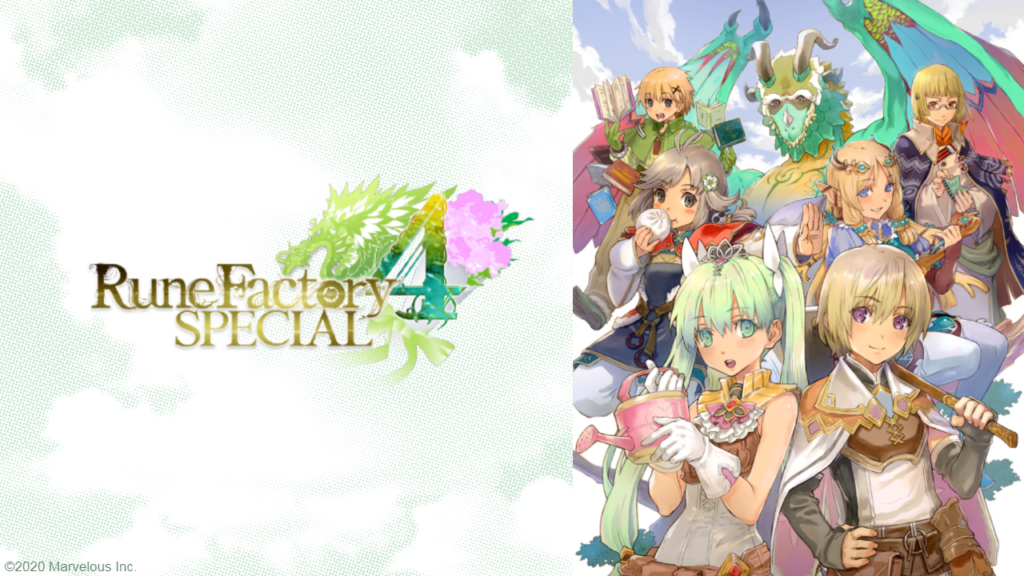
Farming, fantasy, and finding romance are at the heart of Rune Factory, a farming simulation game with action RPG elements. In the day’s early morning hours, you tend to your farm and the monsters you’ve befriended. Once your farm work is done, you and your close friends head off to the nearby dungeon to forage and practice your swordplay and magic skills on the not-so-friendly monsters within. As the sun starts to set, you return home to spend a cozy evening with your beloved spouse, before heading off to bed to start the cycle again..
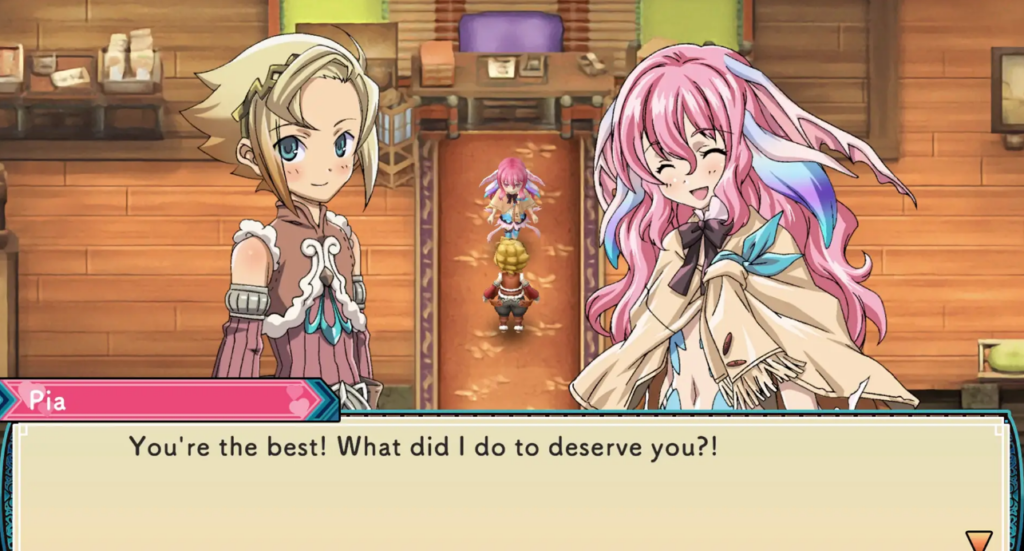
These components each appeal to a female playerbase. The association between women and the romance genre runs deep, especially in writing, where upwards of 82% of romance story readers are women. As for farming and fantasy, according to a 2017 Quantic Foundry study of 270,000 video game players, 69% of “Family/Farm Sim” players are women, and it’s tied with “Match 3” games (puzzle games like Bejeweled and Candy Crush Saga) as the genre with the highest percentage of female players. Quantic Foundry has also determined that “Completion (get all stars/collectibles, complete all missions) and Fantasy (being someone else, somewhere else) are the most common primary motivations” for women to play games. Both of these motivators feature prominently in farming games: there are always many crafting and cooking recipes to unlock and crops with levels to max out. And the farm setting is an appealing departure for many, or, in the case of Rune Factory, tinged with traditional fantasy elements like magic and monsters. Yet despite this female-oriented concoction of categories, there is no option to play as a woman in Rune Factory.
This is an odd choice. Why wouldn’t a farming and life simulation series let players choose their gender at the start of the game? That’s the genre default for a reason: the appeal of a “life simulation” game is developing an in-game life the way the player wants. That includes having the option of playing as a woman. Quantic Foundry finds that the majority of women who play games (a whopping 75%) consider it “very” or “extremely” important for games to have a female protagonist, with the majority (56.8%) considering it “extremely important.”
Players who value female protagonist options also tend to value elements of “Design (lots of customization options), Fantasy (being someone else, somewhere else), and Story (interesting plot and characters).” This overlaps with the components of farming simulators plus the story focus found in the Rune Factory games. Quantic Foundry’s Nick Yee explains that these elements combine to improve players’ immersion in the games’ world and narrative, and there are less ways to be immersed if the protagonist options are limited. To use “a Lego analogy,” Yee says, “the problem with not having blue Lego blocks isn’t that it’s missing blue specifically, but that it’s missing a primary color.”
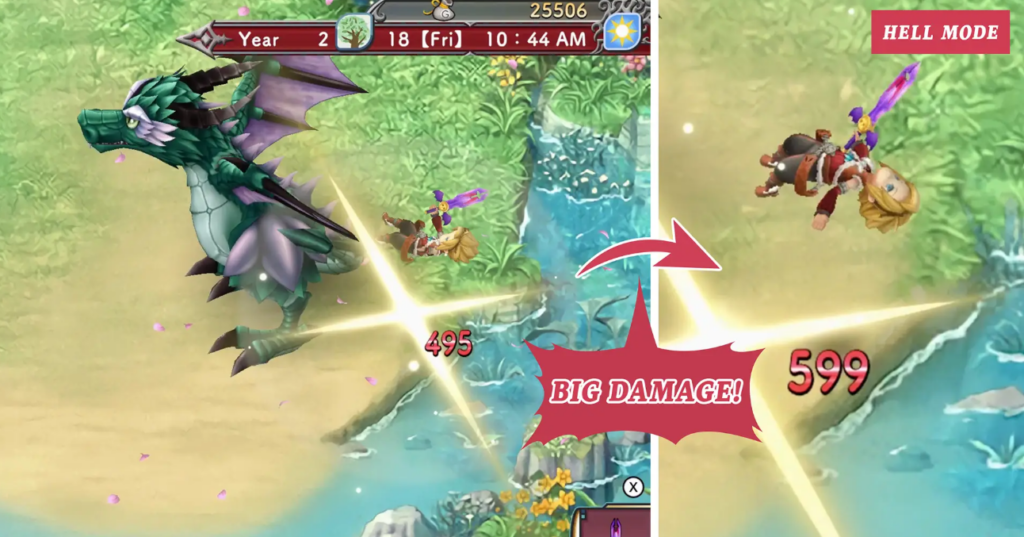
It also doesn’t help that games almost always tied romance to the protagonist’s gender until just recently. Players couldn’t express attraction to men in a game with only a straight male protagonist, depriving players of yet another layer of customization and immersion. It was frustrating that many players of early life sims had to choose their protagonist based either on which character they’d rather be in-game or based on which NPC they’d like to marry, but at least the choice existed in most games—but not Rune Factory.
Of the first five Rune Factory games, only two offer ways to play as a girl or woman at all, but they aren’t even protagonists. In Rune Factory 2, you have to play as a young man at the start of the game, then get married and have a child. When the protagonist goes missing, the player controls his child, who can be a girl. Players can control a female character in 2011’s Rune Factory: Tides of Destiny, but are only given that choice once the game is nearly finished. At that point, those who continue to play as the male protagonist can choose between ten bachelorettes to marry, but players who swap to the female character may marry one of only four bachelors.
I was shocked to discover these limitations back when I was first introduced to the Rune Factory series in 2013. It seems unthinkable given the games’ genres. Series producer Yoshifumi Hashimoto acknowledged in a 2012 Iwata Asks interview that deciding who to marry is one of the series’s “great joys.” While some women did play and enjoy the earliest Rune Factory games, it’s challenging to positively engage with all sides of the games when trying to play the way you want is either severely limited or not possible at all.
Changes started brewing in 2012 when Rune Factory 4 released in Japan, then 2013 in North America. For the first time in the series, Rune Factory 4 had both a male and female protagonist, and players could choose between them at the very start of the game.
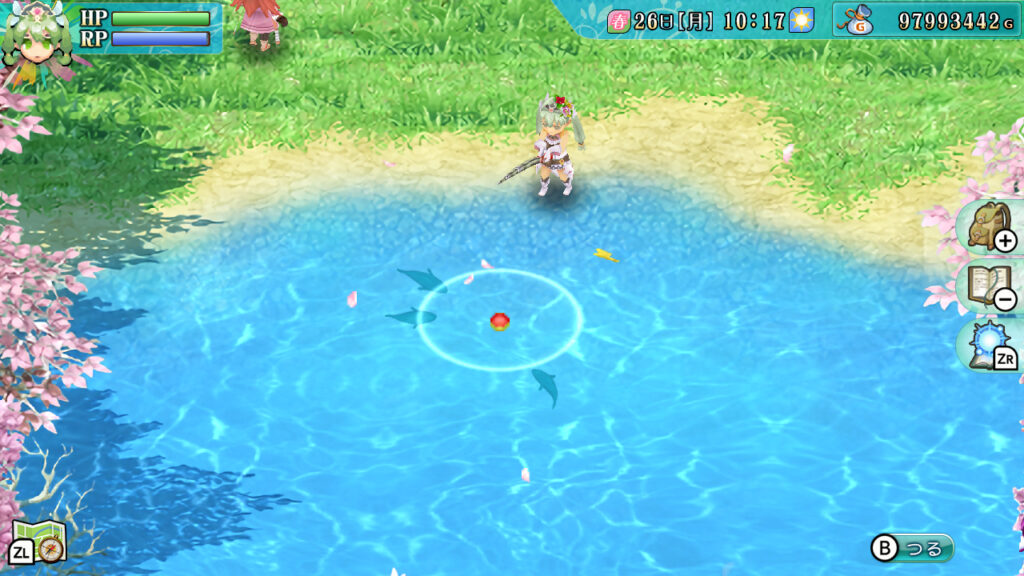
Rune Factory 4 was the first Rune Factory game I played. It was recommended to me by a friend who enjoyed both RPGs and farming games and liked playing as a female protagonist. She thought that I, another woman who likes both RPGs and farming games, would like it, too. And I loved it. I loved the game’s sense of humor. I loved becoming friends with all the characters and starting a relationship with one of the guys (Dylas, my beloved). I loved moving between farming and dungeon exploration and combat. And I loved being able to do all these things as a lady.
And so did countless other women. People such as translator Anne Lee were interested in the Rune Factory series but instead turned their attention to other games because of the lack of playable characters who were women like themselves. But as Lee describes in her blog Chic Pixel, Rune Factory 4 was her “most-wanted 3DS title” in 2012 because of its playable female protagonist, along with its other RPG and farming sim elements. And it would be her first foray into the Rune Factory series, just like it was mine.
This new influx of players showed in Rune Factory 4’s sales. It didn’t take long for Rune Factory 4 to become the best-selling game in the series, with more than double the sales of Rune Factory 2 in Japan alone (250,000 units versus approximately 117,000 units, respectively, with an extra 200,000 units sold in North America). And this success can’t be entirely attributed to its debut console.
Rune Factory 4 was the first (and only) Rune Factory title on the Nintendo 3DS. While many people, myself included, look back fondly on the 3DS’s amazing RPG library, the console’s sales never held a candle to its predecessor’s. Rune Factory 1, 2, and 3 on the DS had a clear console advantage over 4, as did Rune Factory Frontier and Tides of Destiny, which both released on the massively successful Wii (the latter also released on PlayStation 3). The fact the best-selling Rune Factory game is for 3DS, while retaining its niche mash-up of genres, is a testament to the game’s appeal to women, who were now officially included as part of its target audience.
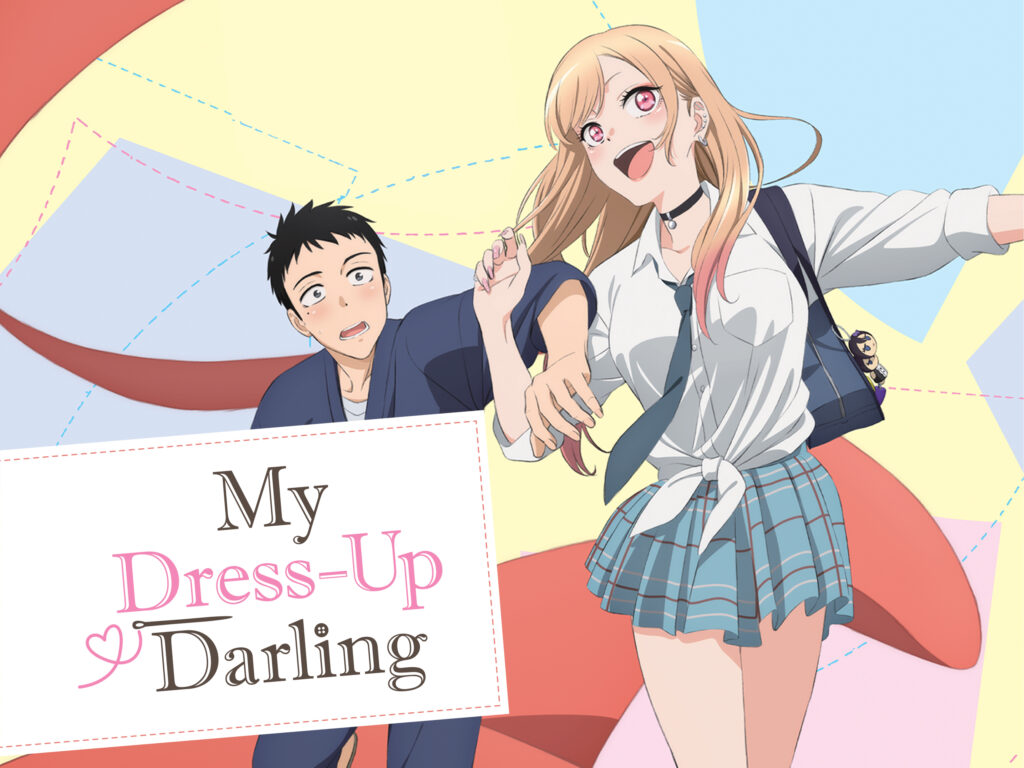
Rune Factory is just one example of how media with an underlying female demographic that’s ignored or underserved sees its metrics explode when women are taken into consideration. This is also prevalent in the realm of anime, which Rune Factory draws influence from. At AnimeJapan’s 2022 business seminar, Crunchyroll chief customer officer Asa Suehira insisted that anime targeting girls and women has “strong growth potential” because the audience is “underserved with relevant content[.]” When a shoujo anime takes off, it exceeds expectations because it has virtually no competition, as Suehira confirmed was the case with the 2019 adaptation of Fruits Basket.
He also pointed out the great success of 2022’s My Dress-Up Darling, an “ecchi” romantic comedy anime that intentionally targets a male demographic. It garners a large female audience thanks to a well-written female lead who uses her agency to control fanservice scenes, and a male lead who earnestly supports her nerdy hobbies. So why are there lower expectations for media that appeals to women? We’ve always been here, watching anime and cartoons, just like how we’ve always been playing farming games and RPGs, just waiting for more representation.
Rune Factory 4’s success was so great that Rune Factory 5 was almost immediately greenlit for development. But only a month after Rune Factory 4’s North American release, which exceeded expectations so much that stores were running out of physical copies to sell, disaster struck: developer Neverland filed for bankruptcy. Despite the resounding success of Rune Factory 4, the future of the series was uncertain, and even worse, many Neverland employees were at risk of losing their jobs. Thankfully, Hashimoto insisted on the Rune Factory 4 Japanese blog that the staff members were “doing well” and hinted that Rune Factory 5 was still in development. Some of Neverland’s staff would be hired by developer-publisher Marvelous to finish another game they had started, and Hashimoto and others went on to open a subsidiary, Hakama, and develop Rune Factory 5.
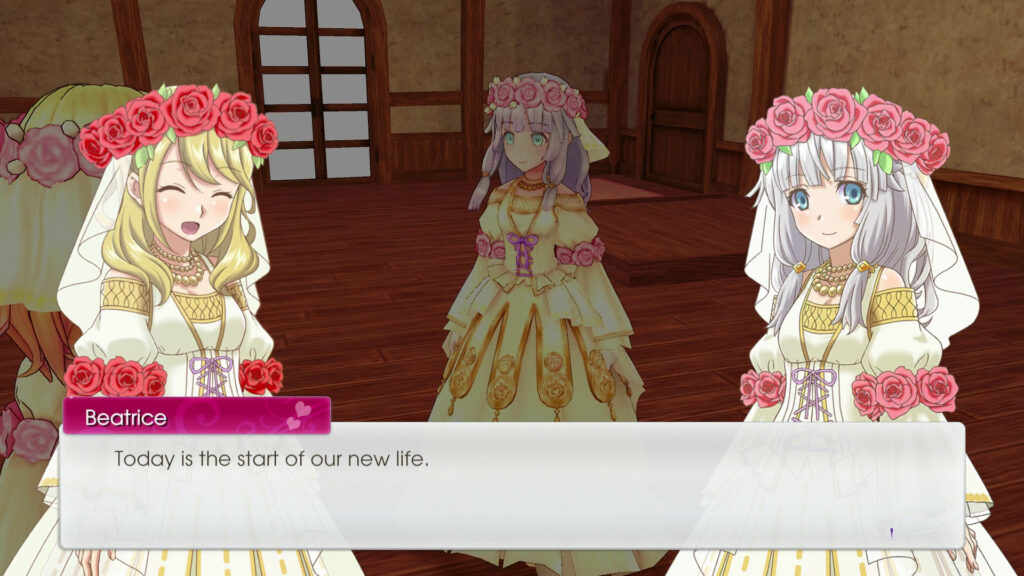
The record-breaking sales of Rune Factory 4 were a big reason Rune Factory 5 entered development at all, so there was no reason to reverse the forward strides it made for the series. Information about Rune Factory 5 began to surface in 2019. It would feature both a male and female protagonist, along with an equal number of male and female love interests. The biggest news of all, though, was that the English-language version of the game would launch with same-gender marriage, which would be added to the Japanese release later through a free patch. Players could finally simulate the life they wanted without gender or romantic limitations, whether that be by playing “as themselves” or not.
Rune Factory 5 released in 2021 in Japan and in 2022 in North America and Europe to mixed reviews, mainly due to various technical issues. But less than two months after its international release, publisher XSEED Games announced that Rune Factory 5 hit 500,000 global sales, surpassing Rune Factory 4 to become the best-selling game in the series. In all fairness, its debut console likely played a big role in these sales compared to Rune Factory 4. Of the top ten best-selling Nintendo Switch games, all of them are the highest sellers in their respective series except for the Pokémon and Super Mario titles, and even those come pretty darn close. Thanks to the incredible popularity of the console, Switch games tend to perform outstandingly. But this means it was more imperative for Rune Factory 5 to include a female protagonist, and move the series forward with same-gender marriage, as more people than ever before had their eyes on Rune Factory.
Although there were numerous factors that kept the Rune Factory series alive, including the increasing popularity of farming games, adding a female protagonist option played a large role by expanding the series’s audience. It also opened the possibility for more interesting, diverse casts of characters by developing love interests of different genders. Now Rune Factory: Guardians of Azuma, the latest game in the series, is proving to be a fast fan-favorite with its lovable cast, including both protagonists and plenty of quirky and charming marriage candidates (Kurama, my newest beloved). It’s become my personal favorite, too, and while Guardians of Azuma hasn’t reached Rune Factory 5 numbers of sales, it was the tenth best-selling game of its release month of June 2025. Rune Factory may never sell as well as the likes of Animal Crossing or Stardew Valley, but it’s become a major player in this space with its recent Switch titles—and it wouldn’t be here at all without the ladies in the audience.