The Pink Pony Club Has a Toxicity Problem: On Queer Visibility and Who Gaming Spaces Are Still Built For
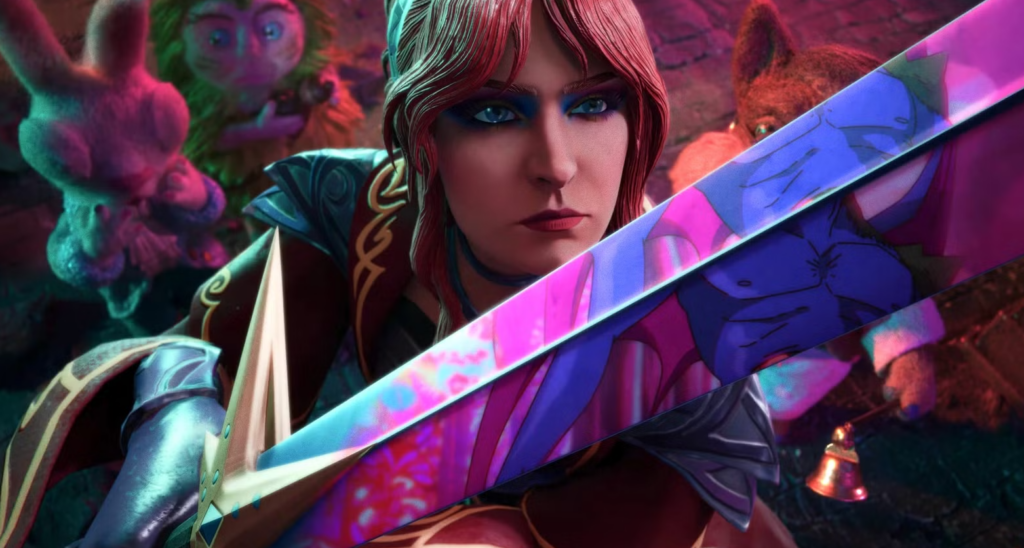
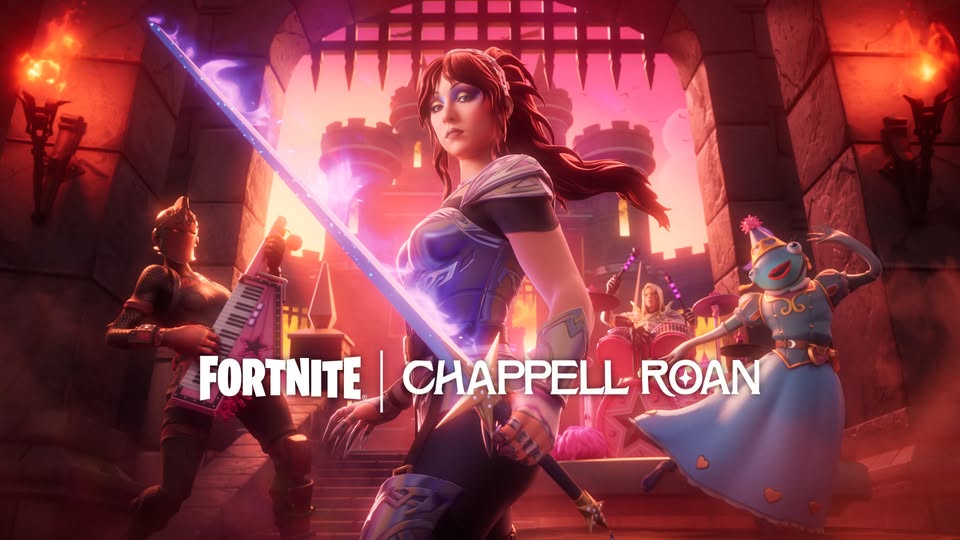
Fortnite has always been a cultural switchboard. Lady Gaga. Billie Eilish. Sabrina Carpenter. K-Pop Demon Hunters. And now Chappell Roan, who in February 2026 became Fortnite Festival Season 13’s headliner, brought Pride back to the item shop after Epic had quietly dropped Rainbow Royale in 2025, and did all of it because she personally begged for a skin in a BBC Radio 1 interview. Diva after diva after diva, each one a hit, each one expanding what Fortnite is and who plays it. The collaborations are working. New audiences are arriving, finding community, finding representation, finding themselves in the skins and the stages and the concerts. That is the real story of Fortnite in 2026.
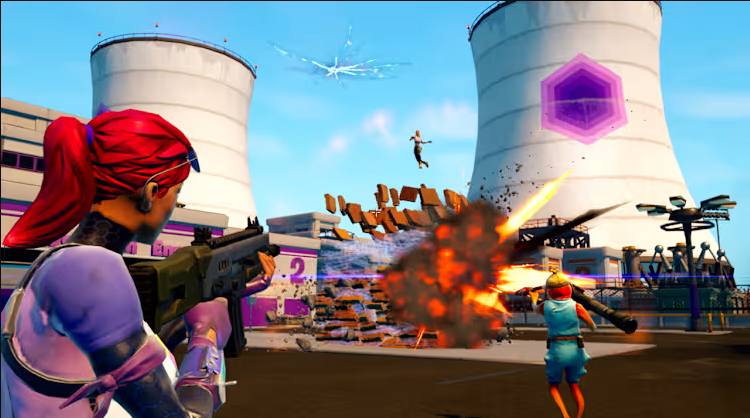
And then there are the numbers. According to the Toxicity Rating, a community-based rating system developed by Melanin Gamers and The Watch, which surveyed hundreds of players across major titles, as of May 11th, 2026, 76% of Fortnite players report experiencing toxicity in game. 85% report direct violent threats. 69% report racism. 66% report gender discrimination. The gap between the game Epic is building and the environment some of its players are creating is the most revealing tension in online gaming right now.
The genre codes we welcome
The 66% gender discrimination figure is the statistical expression of a cultural architecture that was built before any individual player opened the game. You cannot patch it out: it lives upstream of the report button.
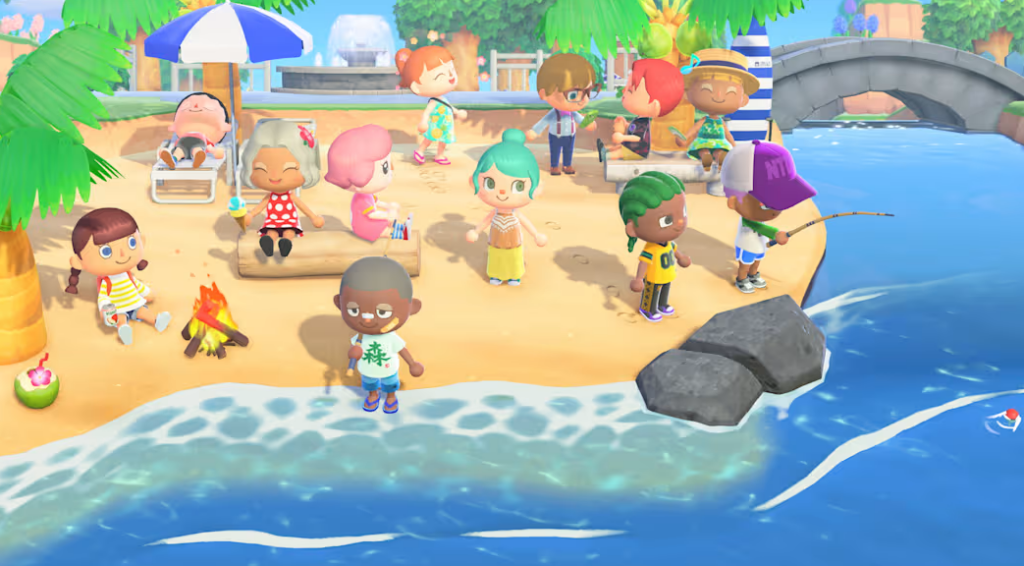
Compare Fortnite‘s numbers to Animal Crossing: New Horizons on the same Toxicity Rating survey: 50% overall toxicity, 46% gender discrimination. The toxicity follows the framing, not the content: cozy games are framed as female spaces, while battle royale games are clearly coded as male-dominated ones. This isn’t a matter of demographics alone—it’s a matter of design language. Cozy games signal their intended audience through aesthetics, pacing and emotional register: soft palettes, domestic or pastoral settings, mechanics built around care and accumulation rather than elimination. Battle royale games signal the opposite. So, if the framing precedes the player, a woman or queer person entering a Fortnite lobby is stepping into a space the broader gaming culture has already designed for someone else—not because of a written rule, but because every visual and mechanical choice has already told them who belongs there. After all, the association of violence with masculinity has been established long before the first login: it lives in toy aisles, in the guns handed to boys and the dolls handed to girls, in the cultural script that says aggression is male and care is female.
What does it look like in practice? The numbers reflect whose presence gets treated as intrusion, and the community behavior reaffirms that. Research on women in esports documents the adaptation strategies this produces: female players avoid usernames and/or avatars that identify them as women, mute themselves in voice chats, de-feminize their language in text. This silence is far from being preferential; it’s a coping mechanism and quite a rational response to a documented pattern of escalating harassment.
G.I.R.L.: Guy In Real Life
There is a running joke across gaming communities, old enough to have appeared in anime, old enough that most veteran players know it without being told: that in online games a girl is a G.I.R.L., namely, a Guy In Real Life. The assumption embedded in that joke is that anyone presenting as female in a competitive space is performative, artificial, something staged for an audience. The “real” player, the presumed default, is imagined as male, while female presence is treated as exceptional. And mostly unwelcome.
And when actual women enter the game, the reaction often follows the same logic. When a woman announces herself in a Fortnite lobby, she is disbelieved or targeted. Interrogated, mocked, sexualized. The previously mentioned gender discrimination figure is, in many ways, the statistical manifestation of that joke taken seriously. The default player is so thoroughly imagined as a male that female presence functions as an anomaly that requires explanation, and the explanation the community reaches for is never flattering. How could a girl online actually be a girl rather than a man performing femininity for attention, amusement, manipulation? All of this reveals how deeply masculinity remains coded as the norm within competitive gaming culture.
The “joke” is not innocent. It is the ideological substrate of the gender discrimination statistic. It is the “logic” that makes harassment legible as a “natural” reaction to a presence that, according to said line of thought, should not be there in the first place. And, in the face of the violence statistics, that joke is not funny anymore. Well, it has never been.
The female skin problem
Here the argument gets complicated in a way that deserves to be sat with rather than resolved too quickly. Around 72% of Fortnite‘s US player base identifies as male. And yet pro players and competitive regulars consistently choose female skins. The myth is that female characters have smaller hitboxes and are harder to hit. Epic has confirmed this is false: all skins share identical hitboxes, regardless of how the model looks. The real advantage is visual and structural. Since Fortnite is a third-person shooter, the camera sits over the character’s shoulder, meaning the model itself occupies screen space. Leaner, slimmer skins—as female models tend to be— hence take up less screen space, improving the player’s field of vision and making them marginally harder to spot at distance. At the highest levels of play, where the difference between winning and dying can be as razor-thin as a fraction of a second, that margin is enough to matter.
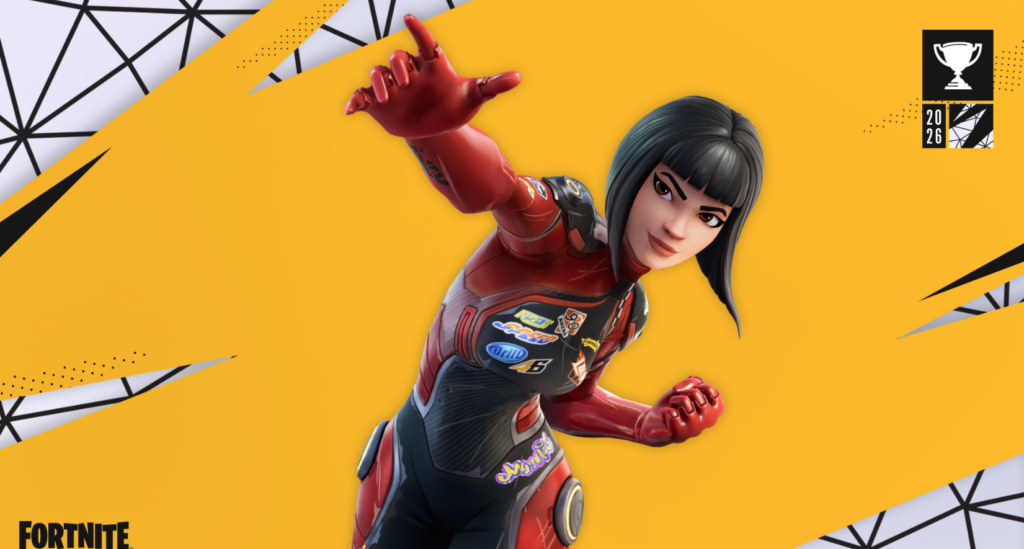
The uncomfortable irony does not resolve into something clean. The same logic has played out across other titles: in Mortal Kombat X, female characters allegedly carry genuinely smaller hitboxes, which competitive players have exploited for decades. Men playing as women for the tactical edge, in a space where women are harassed for being women. The female skin is good enough to equip. The actual female player is treated as an intruder. This is not a contradiction that a design update can reach since it lives in the gap between what the game allows and what the community has decided to do with it.
What the skin communicates when worn by a man—or rather, how the skin is read when worn by a man—is competitive intelligence. When worn by a woman? That she should expect the lobby to make her pay for it.
Planting flags—but visibility is not protection
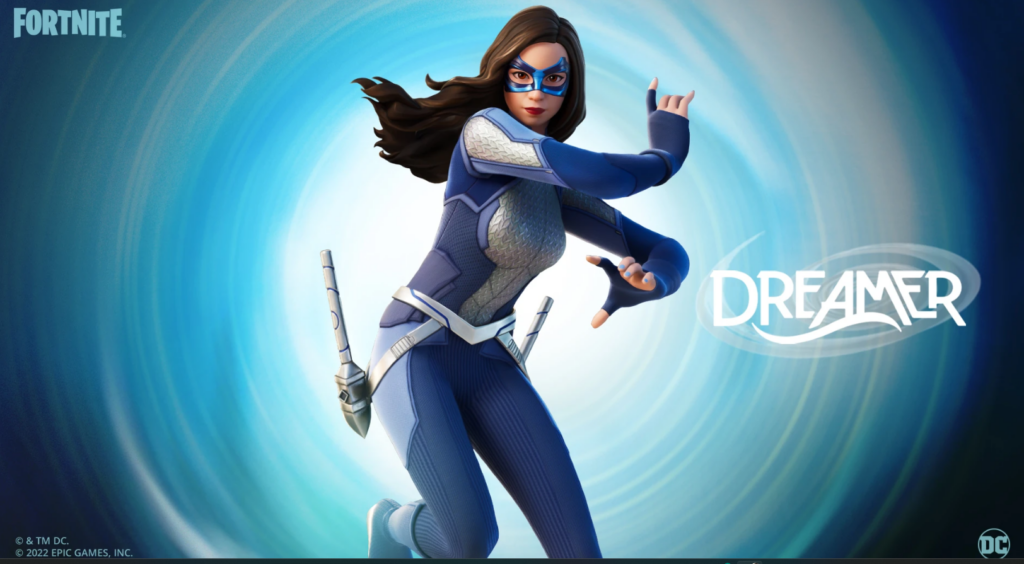
From 2021 to 2024, Fortnite ran “Rainbow Royale,” its annual LGBTQIA+ celebration, modest in scale, but consistent in presence, offering free cosmetics, and, in 2022, a skin for Dreamer, the first canonically transgender character to appear in the game’s item shop. In 2025, for the first time since the event’s introduction, Rainbow Royale did not happen. Epic’s only statement, when pressed by outlets, was that they had missed the window while focusing on other activations. The Trump administration’s active campaign against diversity and inclusion initiatives in the United States provided an obvious context that the company declined to address directly.
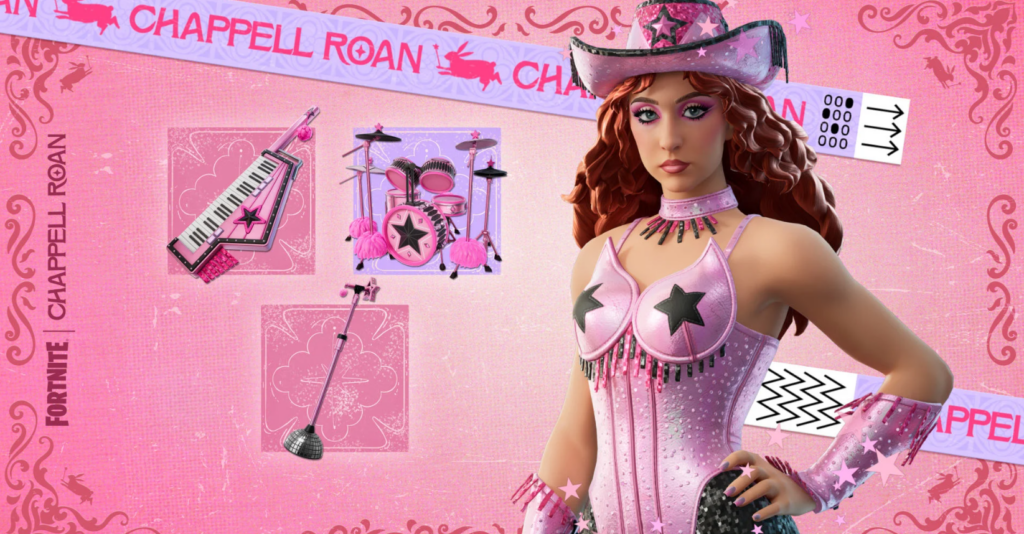
Then came Season 13, with Chappell Roan, an openly lesbian artist, a queer icon, her pink ponies and her Midwest Princess aesthetic pulsing through lobbies worldwide. The implicit political message of giving a lesbian artist a central spot in one of the world’s biggest Battle Royale games, months after going quiet on the only LGBTQIA+ event, is ambiguous enough to generate discomfort. But the practical effect on players is concrete. When a female teenager lesbian who discovered Chappell Roan on TikTok downloads Fortnite to play her Festival set, she is entering a space that is actively telling her she belongs there.
Fortnite‘s player base skews young, with around 62.7% of players between 18 and 24. These are people at the age when they decide whether games provide a welcoming space for them, or a hostile one from which they have been excluded. Considering the previous example of a teenage lesbian, we might say representation in the game is not only cosmetic but foundational. The Pink Pony skins, the Femininomenon emote, well, every single thing about Chappell Roan in the game—that is, her Pride cosmetics and her lesbian visibility inside one of the most-played games on the planet—are planting a flag that tells young girls “this space is yours too,” whether they are part of the LGBTQIA+ community or not— at the exact moment in a young player’s life when that message lands hardest.
The skin will not silence the guy who will shout into your microphone the moment you reveal you’re a woman. But it exists. This is not the first time Epic has played both sides of the same coin. In 2024, Lady Gaga headlined Fortnite Festival Season 2, her setlist including “Born This Way” and “Bloody Mary”—songs with explicit queer histories. In December of that same year, months after skipping Rainbow Royale for the first time, Epic launched a Harry Potter collaboration, a franchise whose creator actively funds anti-transgender legislation and litigation. No statement accompanied either decision.
Epic’s response and its ceiling
Epic has introduced reporting tools, reactive voice chat moderation, and content filtering systems. The collaborations themselves function as cultural intervention—each new diva a reconfiguration of who imagines themselves represented in the space. These are not nothing. They are real moves, with real effects on real players.
Research from 2024 found that 42% of LGBTQIA+ gamers avoided games they anticipated would be hostile to them. They were doing the calculus before they downloaded the game, and that is not paranoia—it is rationality in action. The problem is not an absence of tools. The problem is that these tools operate inside a cultural ecosystem being contested in real time—and this contest has not been settled. The report button does not help if you never open the game and start playing to begin with.
Designs and culture have ceilings, though. When the assumption that the space belongs to a specific type of player is inscribed in community practice, in the running jokes, in the language of the lobby, no moderation update reaches the root. The distance between Fortnite‘s stated values and its community’s behavior is a structural problem, a moderation patch away from nothing.
Chappell Roan plays Fortnite on her Nintendo Switch on a good night. Millions of people find community, connection and genuine joy inside one of the most-played games on the planet every day. The same game that generates 85% of direct violent threats amongst its surveyed players on The Toxicity Rating. Fortnite demonstrates, more clearly than most, how changing what a space looks like and who celebrates it is possible—and that culture moves slower than design.
The Pink Pony skins are multiplying, and those boys (and manchildren) who think it belongs to them are increasingly surrounded. The data just makes it visible how much ground there still is to cover, and how much has already been won.
The queer presence Fortnite has historically catered to skews toward gay men—still men, and therefore still legible within the space the game was built for. Diva culture, camp aesthetics, and the iconography of gay male fandom sit comfortably alongside the existing architecture of a battle royale lobby. Chappell Roan is a different proposition. She is a lesbian, a woman, aggressively femme, a figure whose queerness is inseparable from her womanhood. Putting her at the center of a season is a different kind of statement than a Pride emote—and one that the game’s community was not uniformly prepared to receive.