The Digital Closet: How We Hacked Our Own Pride
Imagine you just bought a brand-new book. You’re excited to dive in, but as you flip through the pages, you realize something strange: the story is written in a way that makes it impossible for someone like you to exist in that world. Every romance, every hero, and every “happily ever after” follows a strict, narrow path that doesn’t include your identity.
Back in the early 2000s, this was exactly what it felt like to be a queer person playing video games.
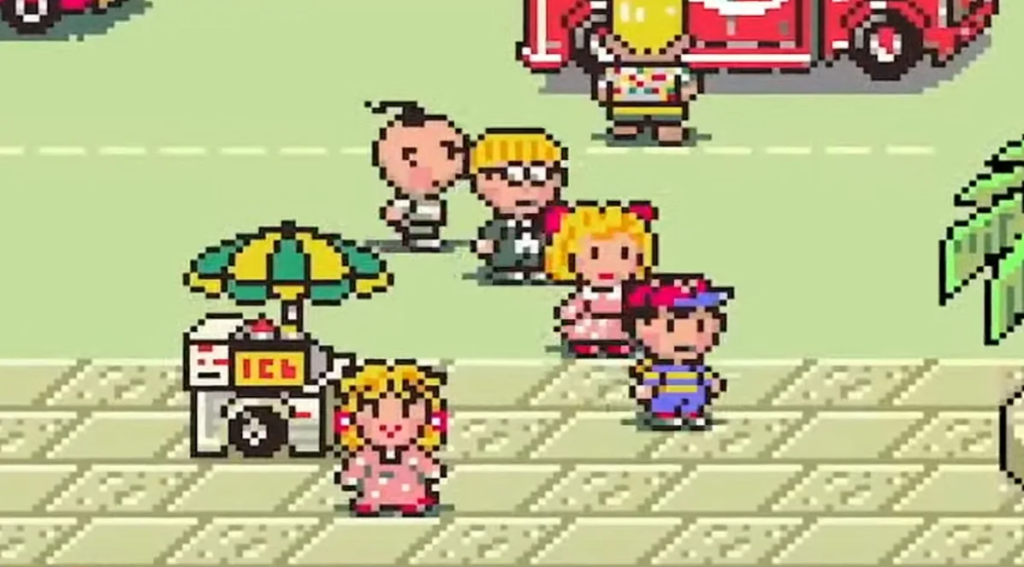
At the time, the gaming industry was a bit of a “closed house.” Big game companies were often terrified of controversy. To stay “safe” for global markets, they would frequently scrub out any hint of queer life. Explicitly queer characters in the Japanese originals of classic games like EarthBound or Final Fantasy were aggressively censored, their dialogue rewritten to make them ‘just friends,’ or their genders completely obscured.
But if the developers wouldn’t build a door for us to enter the story, a shadow army of queer players decided to pick the lock. Through “modding”—rewriting game code from their bedrooms late at night—they refused to wait for permission to be seen. They simply coded themselves into existence.
What is a “Mod” anyway?
To understand how we broke into these digital worlds, we first need to pull back the curtain on how a video game actually works.
Think of a video game’s source code like a strict recipe for a chocolate cake. A ‘mod’—short for modification—is what happens when a fan alters that recipe to bake a strawberry version instead. Sometimes they just change the aesthetic icing, but other times, they rewrite the core ingredients of the world.
For queer players, modding wasn’t just about changing colors; it was about changing the rigid logic of the world. But back then, games were shipped as locked, hard-coded binaries. You couldn’t just open a text file, find a line that said Gender = Male, and swap it to Gender = Any. If a game was hard-coded to check that Character A was male and Character B was female before a romance could start, changing that rule required incredible skill—reverse-engineering, memory hacking, and hex editing. It was complex, exhausting work.
A perfect example of how a game’s inner framework can accidentally reveal a bigger truth happened in 1999, during that year’s E3. A team was showing off an early demo of The Sims, a game that would eventually become a cultural phenomenon.
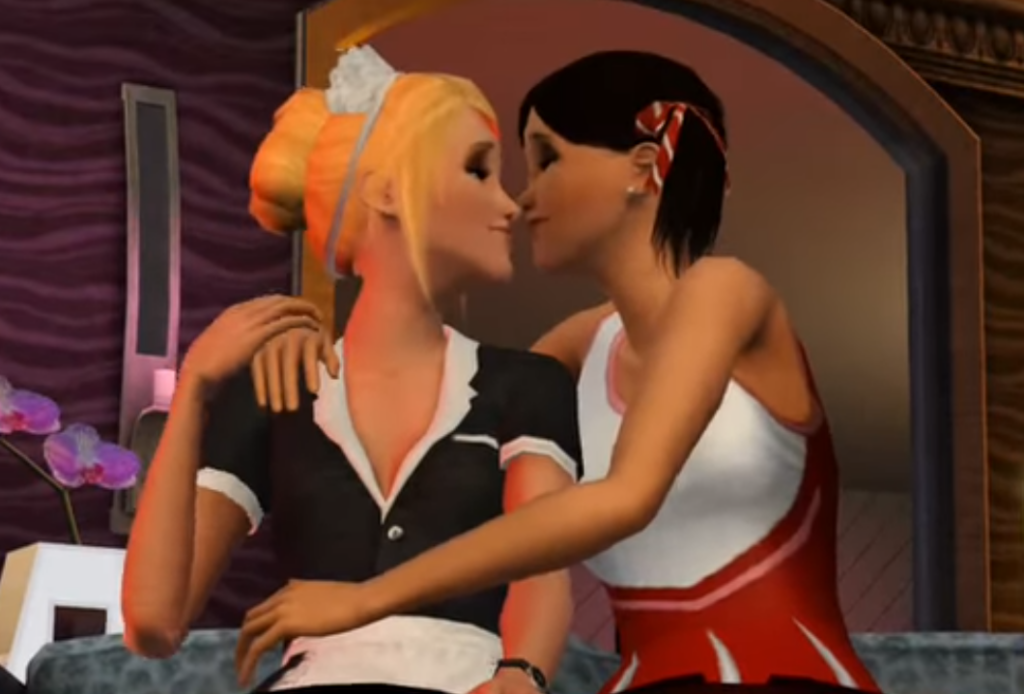
During a live presentation, two female characters on screen suddenly leaned in and shared a passionate, unscripted kiss. The audience gasped. The executives at the back of the room panicked. As it turns out, a programmer named Patrick J. Barrett III had been hired to code the game’s social interactions. He was handed a design document by the game’s creator, Will Wright, that explicitly included same-sex relationships—an idea that had previously been vetoed and buried by other corporate executives. Barrett quietly coded the logic in, and because the system was active during the live demo, the characters expressed it spontaneously.
That “glitch” wasn’t a mistake to us—it was a revelation. It proved that the game didn’t have to be restrictive; the code was actually capable of representing us, it was just being told not to.
To make these changes, modders didn’t need a million-dollar studio. They just needed immense patience, community forum guides, and the willingness to stare at walls of raw hex data until they deciphered the hidden logic controlling how characters fell in love. By manually changing those variables, they were rewriting the rules of reality—taking a rigid, ‘straight’ recipe and forcing it to bend until the game finally felt like home.
The “Pirated Pride” Era
Once we realized the “recipe” could be changed, the early 2000s became a bit of a Wild West for queer creativity. I like to think of this as the “Pirated Pride” era. We weren’t waiting for a store to sell us a rainbow-themed expansion pack; we were building our lives from scratch using whatever digital scraps we could find.
Take The Elder Scrolls III: Morrowind, which launched in 2002. It offered a massive, legendary fantasy world where you could be a hero, explore vast mystical islands, and battle political factions—but when it came to personal connections, the world felt deeply isolating. In the original version, you couldn’t really marry or have a deep relationship with anyone.
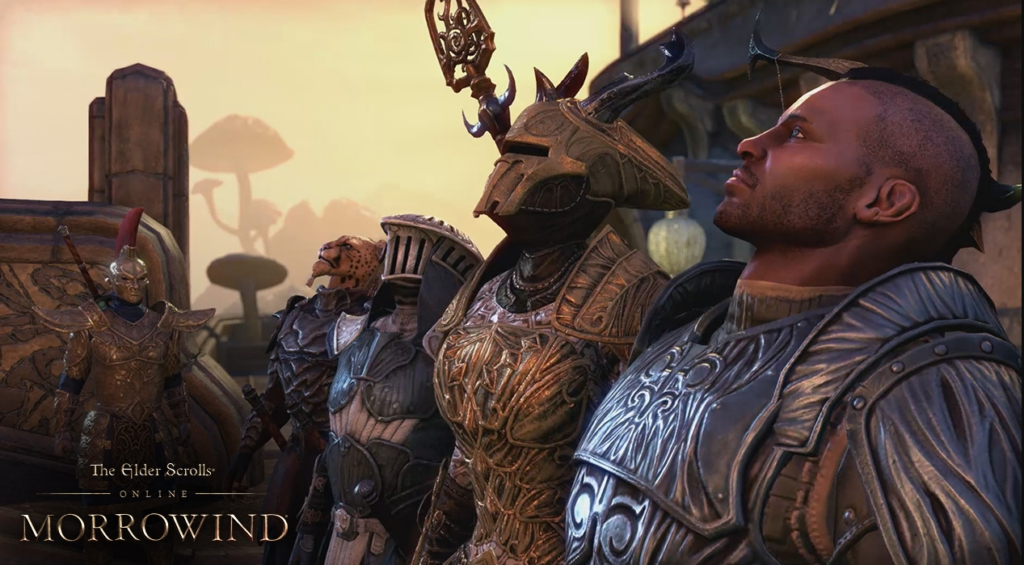
Queer modders looked at that narrative void and saw an opportunity. Using the game’s official toolkit, the Elder Scrolls Construction Set, they spent hundreds of hours rebuilding complex script logic and writing thousands of lines of new dialogue. They created “Romance Mods” that didn’t just add a “Yes/No” button for dating; they built complex, emotional stories where your character could have a boyfriend or a girlfriend regardless of gender. They took a cold, robotic world and gave it a heart.
But here is the most important part to remember: none of this was for money.
Today, we’re used to seeing “Pride Month” DLC or cosmetic items for sale in digital stores. But back then, these modders were doing this purely for love and community. Because mainstream gaming sites would sometimes ban these mods for being “adult content” or “too political,” creators had to share them on “fringe” forums and tiny, fan-run websites.
It was a total grassroots movement. If you found a mod that let you finally see yourself in your favorite game, you didn’t pay for it with a credit card—you thanked the creator in a forum comment, and then you passed the link along to the next person who needed to feel a little less invisible. It was digital survival, one download at a time.
The “ReadMe” Manifestos
To really understand the heart of this movement, you have to look at something called a “ReadMe” file.
If you’ve ever downloaded software, you’ve probably seen that boring little text document that pops up and tells you how to install the program. Most people ignore them. But in the world of early queer modding, these weren’t just instruction manuals—they were manifestos.
When you opened a ReadMe file for a “Same-Sex Romance” patch in 2003, you wouldn’t just find technical steps. Nestled between the “Step 1” and “Step 2” instructions, modders would often leave deeply personal notes. They wrote things like: “I made this because I’m tired of being invisible in my own hobbies,” or “I hope this helps someone else feel like they belong here.”
These files were like messages in a bottle, sent out across the digital ocean to anyone else who felt sidelined.
This created a system of digital mutual aid. If one player figured out how to unlock a relationship framework or change a character’s pronouns, they packaged that data and uploaded it for free. It was an informal network of people holding the door open for one another in an industry trying desperately to keep it shut. If a new game launched ‘hetero-only,’ the community rallied on forums to distribute a workaround within days.
From the Underground to the Mainstream
Eventually, something fascinating happened. The big game studios—the ones who had spent years keeping their doors locked—started looking out the window. And what they saw surprised them.
Whenever a major game was released, the most downloaded, highly requested modifications on community websites weren’t just about graphics or making weapons more powerful. They were the patches that added diversity. They were the mods that allowed for same-sex romance, neutral pronouns, and diverse character appearances.
Companies like BioWare (the creators of Dragon Age) and Bethesda (the creators of Skyrim) noticed that their players were doing a massive amount of unpaid labor just to fix the gaps in their stories. The underground had successfully stress-tested the entire market. By rewriting the code without permission, these modders proved that representation wasn’t a commercial “risk”—it was a massive, deeply passionate, and hungry demographic.
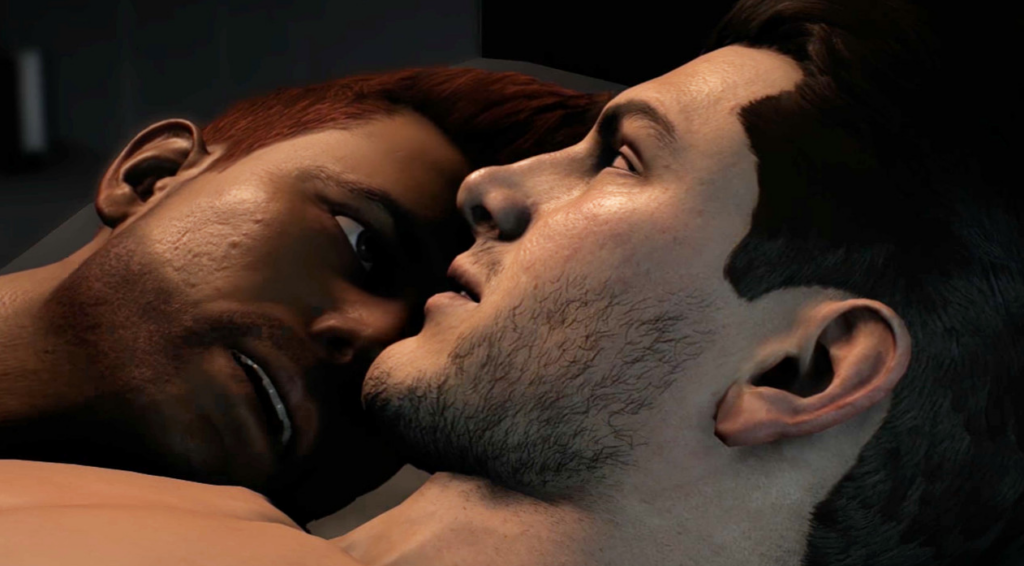
But the shift didn’t just happen because executives saw a market to cash in on. The culture changed because the developers themselves changed. By the mid-to-late 2000s, a new generation of queer writers and programmers were entering the industry and fighting for change from the inside. When studios like BioWare included groundbreaking same-sex romance options in Jade Empire (2005) and Mass Effect (2007), it wasn’t just a reaction to the modding scene. It was the result of internal creators actively fighting to put those identities into the base scripts, using the momentum built by the underground to prove it was possible. Together, external modders and internal advocates proved that queer stories wouldn’t break a game—they made its world richer and more compelling for everyone.
Real change never comes from a top-down corporate epiphany; it comes from the bottom up. For over twenty years, queer players simply refused to play by restrictive rules, forcing a medium that tried to erase them to remember they existed.
The next time you load up a massive, big-budget video game and see a queer character living their life, or a romance option that lets you be exactly who you are, take a second to look past the flashy graphics. Remember the “Digital Closet.” Think about the hidden folders, the anonymous forum threads, and the hacked code that paved the way.
We didn’t just play these games; we rewrote them. And in doing so, we didn’t just fix the code—we built a community where nobody has to play invisible ever again.