BioWare’s Homosexual Progress
Gamers, it’s time to face the facts: one day, everyone you know and love is going to die. Friends—family—beloved pets—no one will be spared the reaper’s sickle, although the vast majority of them can at least look forward to a long and healthy life before turning in for the big sleep.
The average game studio, though? Not so much.
Of course, the mayflyesque nature of any studio’s expected lifespan makes it all the more notable when one successfully defies the odds by chugging along into (relatively) old age, and few studios have been defying the odds for as long as the Albertan freakshow at BioWare. Now a certified elder statesman of the RPG genre, BioWare’s been developing games since the mid-90s, and developing for the triple-A space for nearly as long. I can personally attest to the company’s near omnipresence in my life, from stealing minutes of Star Wars: Knights of the Old Republic on my older brothers’ Xbox, to playing Mass Effect 2 like a full-time job in high school, to even now still drinking my fill of 2024’s Dragon Age: The Veilguard, BioWare’s last game and—if parent company EA has any say in the matter—probably their last game.
One particular facet of BioWare’s games took on a whole new meaning for me in 2019 where, after a one-two punch of NetFlix’s Castlevania and watching Sym-Bionic Titan for the first time, it occurred to me that perhaps there was a reason why Dragon Age II’s rampant bisexuality had held some subtle resonance. If there’s one thing BioWare is known for, it’s the production of choice-driven RPGs, but if there’s two, it’s the production of choice-driven RPGs and an eagerness for sharing queer narratives.
And thank Christ they’re not known for three things, because numéro trois would be the catastrophic fucking-up of queer narratives.
Which brings us to today: with such an extensive library of releases, it’s long past time someone charted the course of BioWare’s homosexual progress, and—unfortunately for us all—it looks like that someone’s going to be me. The line of progress is rarely straight in matters of queer acceptance (that would defeat the purpose), but even more rarely is it as gnarled as that seen across BioWare’s catalogue so, without further ado, let’s take a look at that line for ourselves.
Jade Empire (2005)
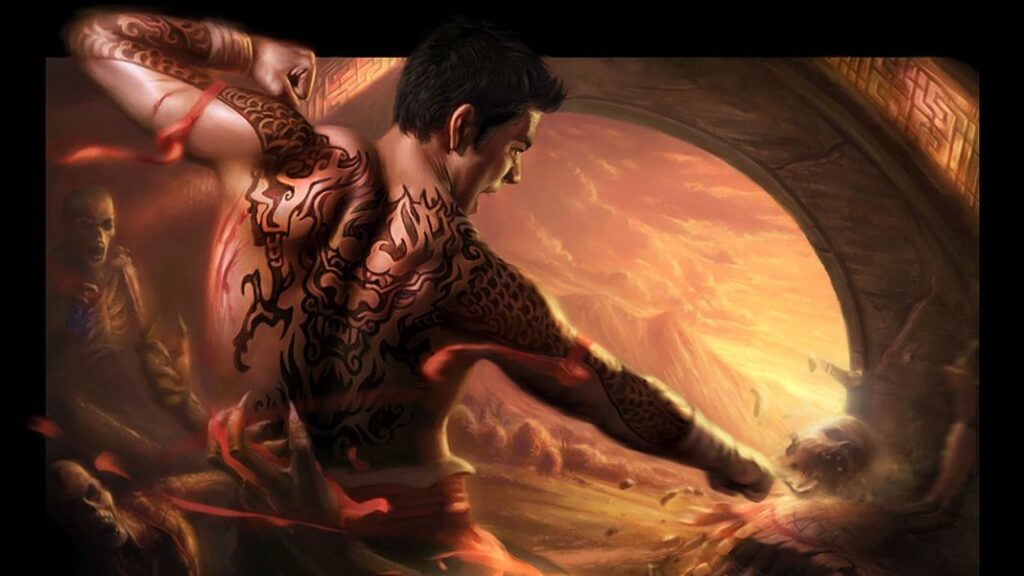
Director: Jim Bishop
Lead Writer(s): Luke Kristjanson, Mike Laidlaw
Wait!
Wait, what?
What about Star Wars: Knights of the Old Republic?
What about Star Wars: Knights of the Old Republic?
Oh, right, the queer content of Star Wars: Knights of the Old Republic. Yeah, one sec:
Star Wars: Knights of the Old Republic (2003)
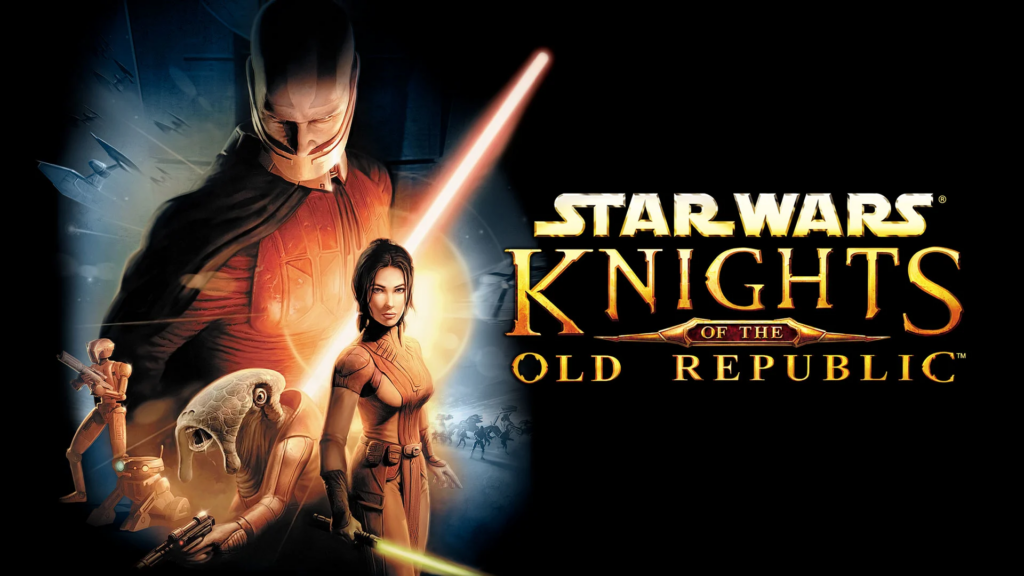
Director: Casey Hudson
Lead Writer(s): Drew Karpyshyn
There’s a lesbian catgirl romance so obscure and difficult to consummate that players debate as to whether it should be called cut content.
See? KotOR might be critical to BioWare’s catalogue in absolute terms, but its queerness barely registers on the pride month richter scale. No, ol’ BW’s gay angle wouldn’t work its way from “longingly vague” to “throbbingly obvious” until the release of Jade Empire, a compact action RPG so offensively wuxia-flavored that it could only have been written by a team of white Canadians.
Now, all shots being fired, I should be clear and unambiguous: Jade Empire is, has been, and likely always will be high on my list of problematic faves. For all its faults, and holy shit does the game have a lot of faults, it’s such an odd duck in the BioWare catalog in the most entertaining of ways, and it does in my opinion feature the single best member of their villains’ roster—but, gay as it is to be evil, villain talk is not what we’re here for.
Coming out the gate strong, I’m surprised to tell you that the majority of Jade Empire’s romantic options are queer. That’s mostly because there are only three options to begin with, and two of those three are bisexual. But, given your other choices for a queer gaming experience in that era was reading about Vivec in The Elder Scrolls III: Morrowind and getting contact HRT from Enter the Matrix, let’s not look a gift horse in the mouth.
Except…
Okay, I didn’t want to say anything, but every gift horse has its cavities, so let’s not give BioWare any retrospective GLAAD awards until we’ve performed a little equestrian orthodontistry. First on the teething block is Sky, dashing rogue and former family man, as well as the game’s only male romance option, and already we’re doing shockingly well—a man who, grieving the loss of his wife, finds comfort in the arms of another man, surprised less to find himself feeling that way about you so much as he is to be considered deserving at all. Sure, it sucks to be the wife in that equation, but every house is allowed one fridge, and the house BioWare built here is a shockingly heartfelt gay love story, especially for the time, and hey have I mentioned that they cut away from the big kiss?
That’s right: after pulling out all the stops selling a bona fide MLM romance, including angsty declarations of “I love you” and epilogues that feature the two of you explicitly retiring to run a gay crime empire, someone still decided that they could call “no homo” so long as we didn’t see two dudes kissing. Also, I was lightly sugarcoating the ease with with Sky’s romance can be pursued, as the only way a male player character (PC) can start it is to decline any interest whatsoever in either female option—meaning that, in a game with bisexual romantic partners, you cannot yourself play a bisexual character. Given a car crash of that magnitude, can Jade Empire’s sapphic option possibly be enough to save its street cred?
Sort of. Mercifully, the game’s queer romance with Princess Sun Lian (AKA Silk Fox, AKA proof that the top of Maslow’s Hierarchy is actually “woman who’s mean to you”) isn’t as difficult to access as the one with Sky, nor does it feature as many dead wives. The game does similarly cut away from their kiss, because we truly cannot have anything good on this bitch of an Earth, but the rest of the romance is solid and—I’ve been saving this as a surprise—also key component of another BioWare first. In fact, it might be part of a BioWare only, because for the accursed freaks out there with two hands, Jade Empire is the rare game that allows its players to engage in explicit polyamory.
Are you happy about that? Are you celebrating? Then stop, because this is where I have to define terms, and the definition of “polyamory” in this case is “a male PC can, by passing certain skill checks, get the female romance options to agree to a ménage à trois.” Controversial definition, I know, and it gets worse when I cruelly inform you of two things, the first being that the other party member in question, childhood friend Dawn Star, cannot be romanced by a female PC in any way. Nothing implied, nothing yearning, nada; you will take your sapphic longing and you will keep it to yourself.
The second thing—and consider this your last chance to dip from the Jade Empire spoilers train—is that, in setting up this sexually geometric arrangement, the game seemingly forgets its own reveal that Dawn Star and Silk Fox are actually first cousins. Meaning that, in strictest terms, the most vanilla-flavored hetero romance option in the game can actually discover some queerness in her own identity, but only within the context of an incestuous threesome.
I mentioned that this game was a problematic fave, right?
Mass Effect 3 (2012)
Director: Casey Hudson
Lead Writer(s): Mac Walters
Wait! But what about—
No, sorry, we’re not doing that bit again. I know that, reflexively, building a gayest hits album for BioWare feels like it shouldn’t skip over 2006 to 2011, and—in theory—I’d have agreed! In the original conception of this article, Jade Empire’s small step for manloving would have been followed up with Dragon Age: Origins, the 2009 fantasy RPG title that most assuredly pushed things further, so let me show you the numbers that changed my mind:
- Romance count
- Jade Empire (2005): 2 bisexuals
- Dragon Age: Origins (2009): 2 bisexuals
Yeah. Although there’s obviously some nuance to the discussion—Origins doesn’t force you to swear a sacred oath against coochie before courting a man, there’s a lesbian NPC romance so amazingly fucked-up that I think it wraps back around to acceptable, and also your squad can run a train on a pirate—speaking purely to a player’s ability to engage in queerness, Jade Empire’s move from zero sexuals to two bisexuals (which maths out to four sexuals) would be BioWare’s biggest for a lengthy stretch of game, especially compared to the Mass Effect series.
I’m not even sure how much I have to remind my fellow gamers, but the first two Mass Effect titles were lagging like hell behind their brethren: while Dragon Age II was brave enough to double its bisexual count (eight sexuals), and Star Wars: The Old Republic snuck in a grand total of seven queer romance options (less impressive than it sounds, given the absolutely insane number of companions the game allows you to accumulate), the first Mass Effect presented a grand total of—drumroll please—zero queer romances. That’s right, I said zero, because however much we love the Asari we have to concede that BioWare’s vision of a monogendered alien race was not the sick Le Guinian fantasy we all deserved, it was an excuse to jam their game full of svelte Star Trek-looking babes (and God bless ‘em for it); thus, a female Commander Shepard going for some blue telepathic tang may fulfill the spirit of sapphic romance, but by the letter of the law it’s a cheat, it’s a fucking cheat and we all know it.
Still, it’s one cheat more than Mass Effect 2 was allowed, after conservative controversy around the first game’s sexual content scared EA off anything that might anger those groups again, a situation I’m sure doesn’t qualify as foreshadowing. The single gayest thing in base ME2 is a lesbian Shepard being so desperate for spussy (space pussy) as to let Morinth, resident Asari sex vampire, tear her nervous system apart like yoga pants.
Which is actually pretty accurate to all the sapphics I’ve ever met so, shit, maybe I’m being too hard on ME2.
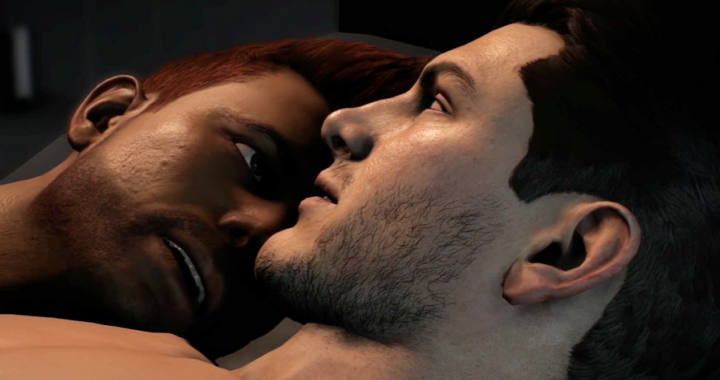
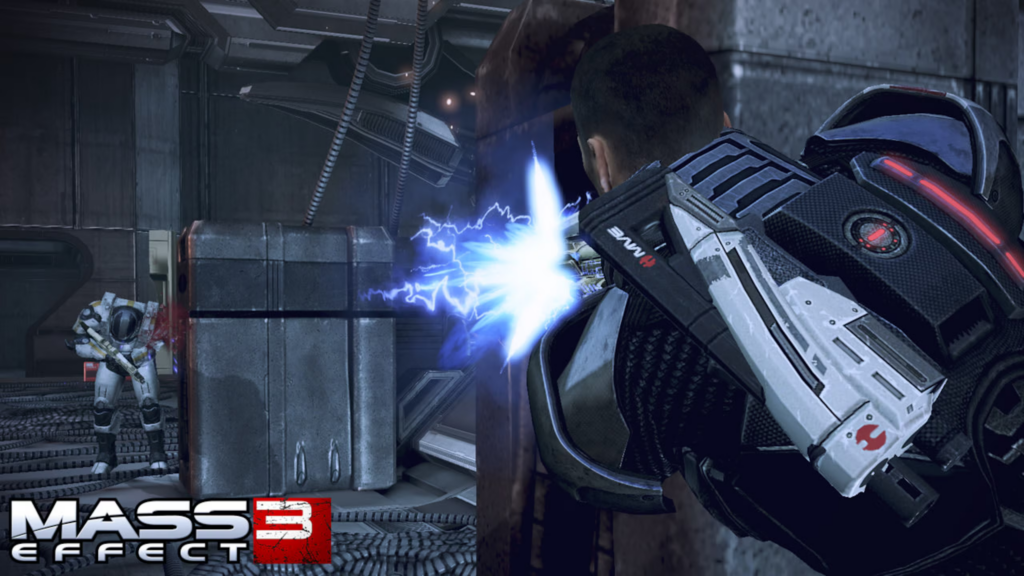
Thankfully, I don’t need to be too hard on Mass Effect 3, because that’s the one where EA was so busy rewriting the ending (we’re not gonna talk about it) that they forgot to pay attention to the romances, leading to a game in which our flag finally gets some colors beyond blue, pink, and purple. We don’t get every color, of course—I’m reasonably certain that if one tried explaining demisexuality to a games writer from the mid-2010s their head would explode—but we do get BioWare’s first dedicated gay and lesbian romances in Steve Cortez and Samantha Traynor. We also get another BioWare only, and without any incest this time, in the form of a party member’s sexuality developing across games. Specifically, returning ME1 squadmate, Kaidan Alenko.
Going all the way back to ME1, Kaidan’s romance was locked solely to female Shepards, leaving him a convenient sacrifice in the infamous Virmire decision for our majority MaleShep playerbase (at least according to Legendary Edition stats). Those who allowed him to survive into ME3, however, were rewarded with the possibility of a bisexual Kaidan, the rarest and most romantically interesting Kaidan in the gachapon. There’s the boy-girl rendition of Kaidan’s love story, obviously, and I’m not about to tell anyone they shouldn’t have enjoyed it—live your bliss, heterosexual queens—but the boy-boy venture is where the queer magic really shines through. It’s the tale of two men refusing to entertain any improper feelings toward one another, burning away so much precious time in the process, and only accepting the possibility of a united future at the end of the world. In a strange way, the first Mass Effect’s failure to engage with queerness served as the perfect setup for a realistically melancholy, yet fulfilling gay romance to span the whole trilogy. Of course, now is when I must play my pathetic role and point out…
… that there’s not really much else to say about ME3’s queer romances. No, really, there’s no twist this time: there is something to be said about the strictly gay characters being strictly noncombatants, and Kaidan’s bisexuality does create a fascinating reality in which players can go back and make the Virmire decision on purely homophobic grounds, but I’m actually going to let us put the W in BioWare for once. Mass Effect 3 was not the end of LGBTQ+ history, but solid progress was made in a series that was born resistant to the very idea, so let us look ahead and see what beautiful future awaits us.
Mass Effect: Andromeda (2017)
Director: Mac Walters
Lead Writer(s): John Dombrow, Cathleen Rootsaert, Chris Schlerf
I am riddled with bullet holes and suffering from numerous preventable diseases.
Look, I’m not gonna lie to you, hypothetical day-one Mass Effect: Andromeda player: things in the real world got real bad real quick and, hoo boy, are they not gonna get better anytime soon. But, at least you got the new BioWare game! And that’s gonna be fun, right?
Right?
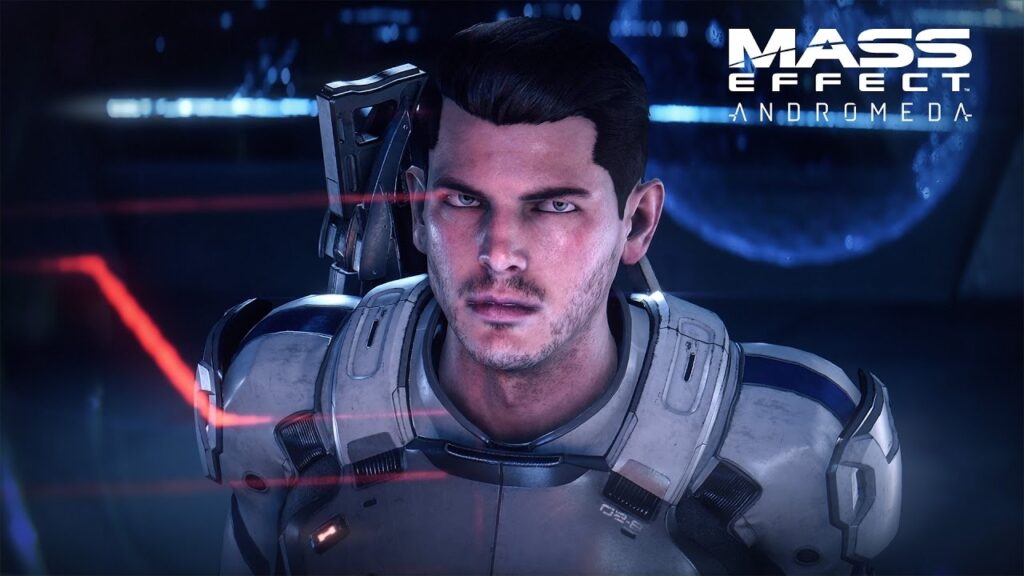
Okay, let’s execute the elephant in the room: I, Theodore Monk, did not play Andromeda day one. I, in fact, did not play it until over a year later, when I begrudgingly bought a used copy for $10 off Amazon. I have since developed some exceedingly strong opinions about that $10, and whether its present location should be “back in my fucking pocket,” but the purpose of this article is not—regrettably—to elaborate upon my feelings of Andromeda as a game. Something can be a middling game, or a bad game, or even a Mass Effect: Andromeda game (I’ll stop) and still be in possession of some good, even great queer content. Given the intermittently occurring trainwreck that’s been BioWare’s oeuvre thus far, how does Andromeda hold up?
Well, uh.
It’s. Uh.
Right. Andromeda, I need to be straight with you—sorry, I need to be honest with you.
You and I have never gotten along, but there’s people I love out there who love you in turn, and a major reason why is because of the example you set as a queer game. Sure, your count of queer romance options is almost exactly the same as ME3’s, but there’s a difference between riding the wave of good vibes and standing against the approaching storm, isn’t there?
So what would those people think if they found out how close we came to that not being true? That, until a patch nearly three months after release, two of the bisexual romance options didn’t exist, almost leaving a gay male PC with no eligible bachelors on the squad?
Yes, I know there was still a pure MLM option at release. In fact, it’s a good thing you brought that up, because I’d been meaning to ask: why were the gay man and the lesbian once again shunted into support staff? I let ME3 off the hook for this, but they were scrounging for space amidst a massive cast of established characters, while you had a brand-new canvas upon which to paint. You could have made Gil and Suvi anything, and—no disrespect to the engineers and scientists of the world—you made them play second-string to the player’s squad, the people with whom they’ll be spending 90% of the actual game. Once is a mistake, BioWare, but twice is negligence.
And, oh, before we get too far away from Gil? Not to imply anything against queer folk seeking to start a family, but… I’m sorry, you’re aware how it looks to show us the one gay man in the literal galaxy and reveal that his innermost desire is to shack up with a woman so she can have his kid? You fathom how that fucking looks, right? Right? And don’t get me started on the Asari again, or how Peebee’s sex scene was pretty obviously animated without consideration for a female PC (do not tell me you had Ryder gock in mind, I do not believe you), or how you handled the series’ first trans character ever—
I’m sorry. No, no, I’m sorry, I just… I’m not mad at you, Andromeda. I’m just disappointed. So many of my queer homies out there love you to pieces, and I just don’t think you’ve done right by them. I know you can do better, so do better, okay?
Dragon Age: The Veilguard (2024)
Directors: Corinne Busche, John Epler
Lead Writer(s): Trick Weekes
From a Pride perspective, Dragon Age: The Veilguard is a fascinating beast, a homunculus 15 years in the making from a series that could be called BioWare’s most consistent source of queer content. They’ve mostly been mentioned in the background up to this point, but it’s worth reiterating that Dragon Age has been serving up gay slam dunks (at least when it comes to AAA games) pretty much since its inception. It hasn’t been a bumpless road to get here — Anders from DA2 gets an actively less bisexual backstory if you romance him as a woman, Inquisition decides that the third game in a universe with minimal homophobia is the right time to bring out a conversion therapy subplot, and for the love of Jesus Christ do not ask if they cast a transmasc actor for transmasc champion Krem — but the journey of a thousand miles begins with a single step, and the people of BioWare have been step-step-stepping right along Dorothy’s yellow brick road. Now that we’ve reached something resembling a destination, how has Veilguard followed up on the success of its predecessors?
Would it surprise anyone to learn the answer is a little complicated?
To get the unambiguous wins out of the way first: as was much touted before release, Veilguard is the first BioWare game to let players go truly hogwild with their PC’s gender, trading out the standard male/female binary for a freeform combination of body types, voice types, and pronouns, including an option for “they/them.” Moreover, if you want to play a transgender savior of the universe, it doesn’t have to be assumed or implied—an early game dialogue option allows players to just state it as fact. Adding some delicious demi-glace to the GNC gravy train, we hit another BioWare first in Taash, party tank and pronghorned smokeshow whose personal questline is about coming to terms with their nonbinary identity. Just off those examples alone, it’s tempting to say that BioWare’s queer content has come so far as to wrap things up, send all past and present devs a giftbox, and stamp their asses with the gay illumanti’s seal of approval.
The turn some readers might expect, then, is to dig into Veilguard’s romance options, whereupon I’ll be forced to reveal that there are no bi or gay characters at all—players are, instead, presented with a team of seven playersexuals, characters whose only clear orientation is toward PCs that express some level of attraction toward them. Playersexuality has been a deeply controversial topic in recent years, and it may be natural to object to such a patent flattening of sexual identity in lieu of something more deliberately crafted.
But—if I can get on the soapbox for a second—playersexuality was, realistically, the only choice BioWare could have made in an RPG with such gentle restraints on gender expression. Gays and lesbians in the meatspace can pretty fluidly negotiate where the lines of their attraction lie, and adjust the markers as appropriate, but things get much dicier when every player decision must be answered with an ironclad 1 or 0.
Take Dorian, mage companion from Inquisition and native denizen of the Castro District, who could express eager interest in a male PC and gentle disinterest in a female PC, then ask how in God’s name an equivalently gay character might have been handled in Veilguard. Should he have fallen for a “he/him” PC with all the most outrageously femme appearance options? Should he have turned down the buffest, beariest chad imaginable because the player picked “she/her” right at the end? What if the player had gone for “they/them” instead? What if they’d gone for full agender androgyny? Should the voice type matter? The body type? Should BioWare have just said “fuck it” and made the whole thing a weighted score of different options, aka the Blizzard diversity strategy? As may now be apparent, the whole endeavor quickly becomes a psychosexual minefield of digital queerphobia, leaving BioWare the choice to either reinstate a male/female binary, or give the NPCs a playersexual turn. As-is? They made probably the safest bet.
That, in fact, may be the best word to describe almost all of Veilguard’s queer choices: safe. This may sound like a bonkers way to put it, given that the last few years have treated the barest ripples of queerness as chum in the water—the sharks in this metaphor are homophobes, just like in real life—but the fact is that these decisions are safe from a queer perspective. The dipshits are always going to hate it, sure, but we the people know good gay shit from bad gay shit—and safe isn’t in quite the same ballpark as good.
The whole cast, by design, possesses an orientation compatible with yours, so there never needs to be a conversation about preferences or boundaries. The PC doesn’t have a poetic or diagetically justified means of communicating their gender nonconformity, the writers simply use the word “trans” and hope one won’t wonder when the feudalistic world of Thedas developed robust enough gender theory to also develop the relevant slang. Even Taash does not piece together terminology for their identity from homegrown Qunari culture, a belief system with such insanely convoluted views of gender that it gave us gaming’s first trans-inclusive radical misogynist, but instead from… citizens of Dragon Age’s slaveowning mage supremacist empire? The same one with that conversion therapy subplot? Holy shit, maybe “safe” was the wrong word.
Frictionless, then. It’s frictionless: the problems with Veilguard lie not in its eagerness to put both feet in its mouth, but in its reluctance to try anything that could put a single moralistic toe out of place. Rather than risk navigating new fronts of queerness within Dragon Age’s world, it sands off every possible rough edge in favor of smoothly modern terms, smoothly modern problems, and smoothly modern solutions. Is that all better than the numerous dumpsterfires that lit the path of BioWare’s early career? Objectively, yes—but the freak in me can’t help mourning the missed opportunities.
Thankfully, time moves ever forward, and new opportunities run up to meet its incessant march. Where might BioWare go from here, given the lessons of nearly two decades?
Nowhere, probably.
That introductory swipe about Veilguard being BioWare’s last game wasn’t just a hack gag: it’s no secret that it undershot EA’s sales goals by a significant amount, while also being the third—no, I’m sorry, the fourth game in a row (apologies to our infinitely forgettable friend Anthem) to suffer such a turbulent dev cycle that it’s a miracle nobody fucking died. EA’s habit of acquiring successful studios and then grinding them into succulent gamer paste is such cliché that people were already making casualty lists over half a decade ago.
And, hey, speaking of casualty lists: those credits beneath the titles above? Not a single one of those individuals works for BioWare anymore; some were temporary hires to begin with, consultant writers and such, but others like Casey Hudson and Trick Weekes have joined their fellow veterans, voluntarily and otherwise, in a mass exodus from the studio. BioWare is a ship of Theseus that’ll be lucky to wrap up one final voyage, the mythical Mass Effect 5, and even luckier if it’s allowed another chance after that.
Of course, this is all old news. EA killing off a historically celebrated studio? No duh. BioWare being deep in a decade-long slump? Yeah, dude, we know, we’ve also been playing the games. At this point I might as well report on water being wet, or Tim Sweeney being weird about AI, because it’s not as if there’s anything left to say about BioWare’s inevitable demise. Nothing to say, although perhaps one thing to ask:
Who else could have been the subject of this retrospective?
That’s not a rhetorical question. Who else in the triple-A space is still around with a catalogue so extensive, and so extensively queer? Thought experiment: swap out “BioWare” in the title for any other mainstream studio and imagine the result. You want to know what this list would look like for, say, Infinity Ward? The studio responsible for the ludicrously successful Modern Warfare franchise, founded three whole years before the release of Jade Empire? Wrap your head in a towel and then punch yourself in the solar plexus, that’s what the fucking list would look like.
Now, perhaps that’s an unfair example; Infinity Ward games famously have just two artistic aims, to shoot everyone in the world who’s not American and also remain non-political, and it’s not like every studio need aim for explicitly queer narratives, is it?
Firstly: you are always allowed to be unfair toward Infinity Ward. It is always morally correct.
Secondly: sure, not every studio needs to make queer narratives its single objective—if anything, doing so would be uncomfortably close to commodification, LGBTQ+ storytelling turned from earnest artform to cynical checkbox—and we have plenty who are making them anyway. Even a casual straw poll produces an extensive list of successful developers who have, at some point, included explicit queerness in their games, going back to the turn of the millennium: PlatinumGames, Supergiant, Rockstar, Ubisoft, Konami, and more, and more, and more. From a certain point of view, we’re set when it comes to queer offerings in gaming.
From another, we’re not set at all, not when it comes to what only BioWare seemed to be offering. It can’t be stated enough times, BioWare is one of the oldest RPG developers still in the business, and the fact that they are specifically an RPG developer matters. It’s one thing to be presented a queer perspective, but it’s actively another to inhabit one. To be allowed to shape it through narrative decisions, to discuss it, live in it, not just see a gay or bisexual or trans or what-have-you character on the screen but provably be one, and who the fuck else has been doing that? Bethesda, with The Elder Scrolls V: Skyrim’s gender agnostic marriage system, playersexuality taken to its blandly ludicrous extreme? Larian, modern progenitor of the playersexual revolution and strange defenders of AI generation? CD Projekt Red, who made their own strides toward BioWare-grade queerness with Cyberpunk 2077 and may have only succeeded at inheriting the studio’s queer ineptitude?
At no point should readers assume that I’m trying to brand these studios’ properties as holistically inferior to BioWare’s—the affection I have for CDPR’s The Witcher is deep as Marianas and also probably a red flag for every person I have ever loved—nor am I trying to imply that BioWare deserves some innate respect by virtue of its efforts. Let me be 100% clear: BioWare, profit-motivated corporate entity BioWare, is not owed any loyalty, and its bursts of positive rep do not cancel out its frequent missteps. The loss of a company is not the loss of its artists, and to think otherwise is capitalistic devil-talk. However, I’m bisexual, which means I’m allowed to think two things at once, so let the second be this:
The death of BioWare is going to hurt. It’s going to hurt like a son of a bitch, and not just because this son of a bitch has only ever known a world with BioWare in it. It’s going to hurt because their two-decade streak as RPG gaming’s premier source of queer experience is coming to a rapid end, and it’s extremely questionable if anyone’s ready to take the baton. Fuck’s sake, even the RPG developers willing to put gay content in their story want to make deadly sure you know it’s not some of that woke gay content, do you really think the modern political landscape is going to convince them to work harder on queer inclusion? Do you really think they won’t quietly chip off the T, the B, and then the G and L if that’s what becomes most convenient? Remember: even BioWare buckled under the pressure, and that was before exerting such pressure became a point of national pride.
Within years—a decade, if we’re optimistic—BioWare is no longer going to exist. Like everyone you know and love, they will be gone, and in their place will sit a void, a void that might one day be filled—or might sit vacant forever. Progress, necessary and good as it may be, is never guaranteed, and every victory, however small, is a more-than-earned blessing. Sometimes victory looks like the very existence of these games in the first place, queer narratives to be not merely observed, but lived. Sometimes victory looks like a lifetime’s worth of BioWare love to share, contributing what little I have to the record of a queerly complex gameography. And, sometimes—maybe sometimes—victory looks like an incestuous threesome with your cousin.
Special thanks to Dr. Vasilijie Mesarović for his invaluable assistance writing and researching this article. Without him, the arguments contained herein would have been much saner and more comprehensible.